

Book a Consultation
Wanting to explore individual sessions?
These 60 minute 1:1 sessions will be held regularly based on the client needs and preferences. Choose this option if you are looking to contribute to treatment planning, goals, objectives, and overall treatment process. An immersive experience for the client to guide their journey with the music therapist support!
Needing something more for your organization or a larger part?
Our therapist aims to promote social connectedness, empowerment to enhance ones’ quality of life. I utilize Community Music Therapy and Humanistic Music Therapy approaches to assist individuals working towards similar goals and objectives. Group sizes consist of 4-10 individuals. For organizations with larger groups please contact for details in how music therapy can be beneficial and for rates.This option is great for Adult and Child care programs, school settings, behavioral health, and health and wellness groups. Contact for a consultation on what groups are being offered this season!
we offer services for:
Children/adolescents with special needs, mental health conditions (anxiety, depression, stress) and those who fall under the pediatric/youth categories
Adults with special needs, experiencing difficult life transitions, veterans, caregivers and family members, mental health conditions, and general well-being/personal growth goals
Groups/organizations: Whether your a school, community program, non-profit, a gaggle of siblings/friends, or an adult living facility this service may work for you! available for individuals across the life span and spectrum, groups focus on social integration, life skills, and coping skills.

Telehealth Requirements
Access to internet or wifi (able to maintain a strong connection)
a device separate from your phone (laptop, ipad, screen caster service)
instruments (NOPE) - while beneficial dont think you need them to start or continue.
A working mic and camera (can be tablet or ipad mic)
environment with minimal distractions
YOU (along with a caregiver if needed)
Mobile Music Therapy
A space with limited to no distractions for privacy and focus
Pets are OK! (for in-person services take caution if they are wary of new people!)
Instruments (Provided!)

More About Music Therapy!
Rhythm and Life Music Therapy offers flexible virtual and mobile services to increase access to care and meet clients where they are most comfortable. Telehealth sessions are provided through a secure platform and foster connection, reflection, and meaningful music experiences from the comfort of home or another preferred space. Mobile services extend therapy beyond the office into familiar community environments and are thoughtfully adapted to each setting, supporting continuity of care and real-life integration. Both service options maintain the same evidence-based, client-centered approach as in-person sessions and are designed to support emotional, cognitive, and functional goals.
How Can Music Therapy Help?
Fine and Gross motor development: Music therapy can help strengthen both fine and gross motor skills through engaging musical activities. Playing instruments, drumming, or moving to rhythm supports coordination, motor planning, and muscle control—all in a fun, motivating way tailored to each client’s goals.
cognitive development: Music therapy supports thinking skills like memory, focus, planning, and problem-solving. Structured music activities and interactive exercises give the brain a workout, helping clients stay sharp while enjoying the process of making music.
emotional regulation: Music offers a safe space to explore and express feelings. In music therapy, clients can process emotions, reduce stress, and learn strategies to manage moods, all while building self-awareness and emotional resilience.
social integration: Making music together encourages connection, cooperation, and teamwork. Group sessions, ensemble playing, and interactive musical games help clients practice sharing, turn-taking, and social engagement in a supportive, non-judgmental environment. Even in individual sessions, music therapy can support social skills by using role-play, call-and-response, interactive songs, and collaborative exercises that build awareness of social cues and strengthen interpersonal confidence.
coping skills: Music therapy gives clients tools to handle stress and challenges. Through rhythm, songwriting, and guided musical activities, clients can discover healthy coping strategies that translate into everyday life.
communication skills: Music is a bridge for expression. Whether through singing, playing, or movement, clients develop verbal and nonverbal communication skills, learning new ways to express themselves and connect with others.
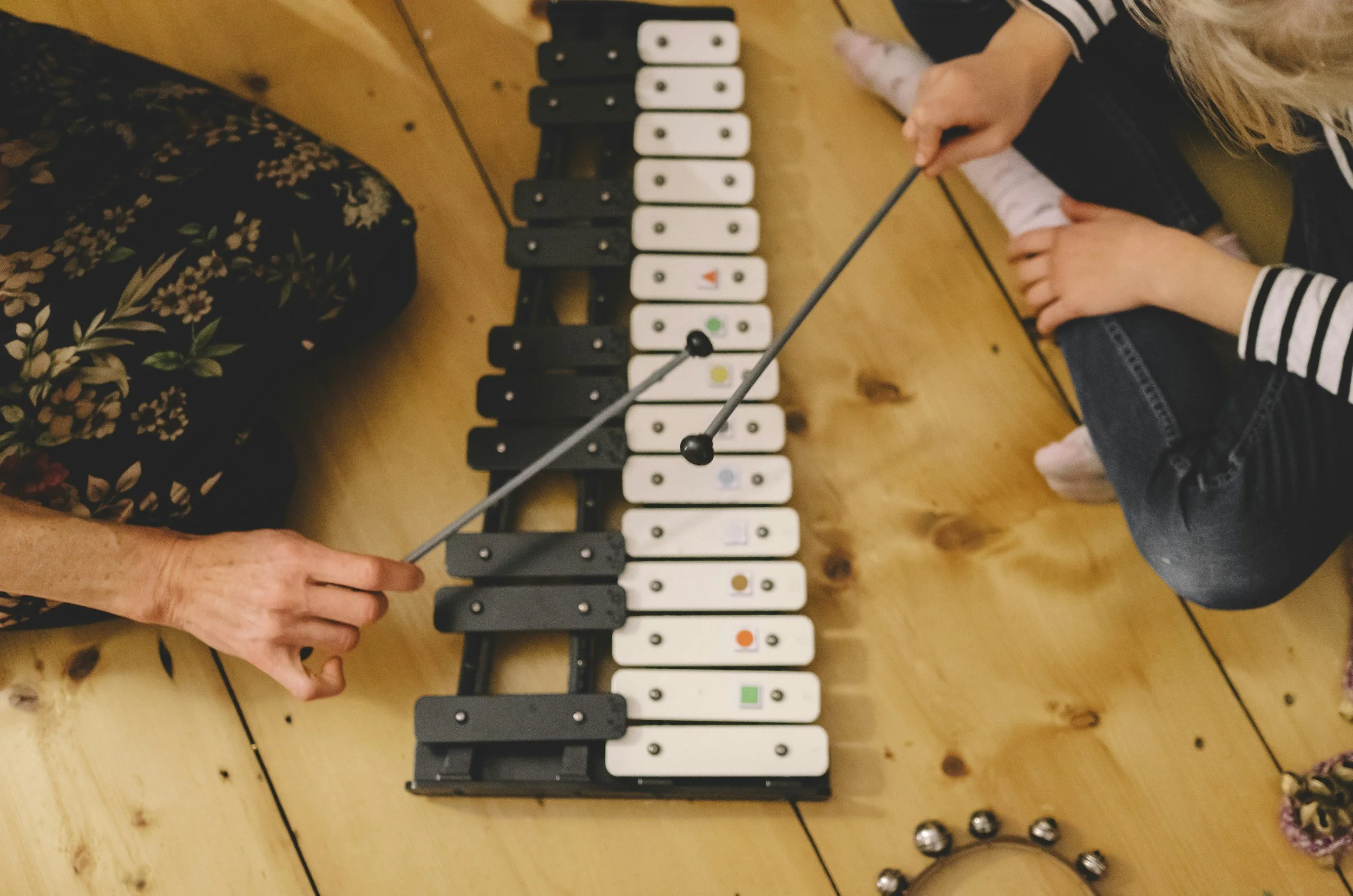

self-actualization and personal growth: Music therapy supports clients in exploring their strengths, values, and creativity. Through songwriting, improvisation, and guided musical experiences, clients can reflect, build confidence, and work toward personal goals—helping them grow, express their unique identity, and feel more empowered in daily life.
depression and anxiety symptoms, and stress management: Music therapy provides a safe, supportive space to manage emotions and reduce stress. Using guided listening, rhythm, and active music-making, clients can release tension, regulate mood, and develop coping strategies to better navigate anxiety, depressive symptoms, and the pressures of everyday life.
Pain management and physical rehabilitation: Music therapy can support physical rehabilitation by combining movement, rhythm, and instrument-based exercises to improve motor function, coordination, and endurance. Listening and making music can also help reduce perceived pain, provide distraction, and promote relaxation, making recovery more engaging and motivating.
Group Music Therapy: Rhythm and Life Music Therapy offers structured group sessions designed to support collaboration, communication, and social engagement. Group music therapy fosters connection, teamwork, and shared expression, helping participants build interpersonal skills, self-confidence, and emotional awareness. Our sessions can be delivered in-person or via telehealth, providing organizations with flexible options that maintain high-quality, evidence-based interventions while increasing access for participants in multiple locations. Telehealth groups are especially effective for connecting dispersed participants, reducing travel barriers, and ensuring continuity of care without sacrificing engagement or interaction.